
Album Review: Eramus Hall – Lost and Found
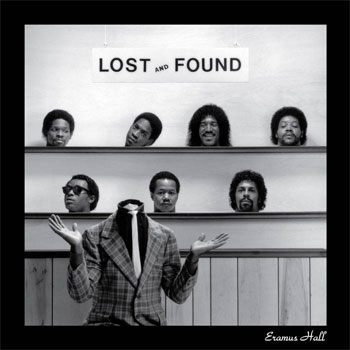 Eramus Hall is one of those hard luck stories with which the history of popular music is rife. In the case of this Detroit soul-funk outfit, the group signed to Westbound Records, releasing a well-regard debut; it largely passed by without wider notice, and soon the group was off Westbound. They signed with Capitol, released another record, and that was effectively the end of the story.
Decades later, Org Music forged a deal with Westbound, releasing the sought-after debut. Now Org Music returns to the well, digging into the Westbound archives and unearthing eight tracks from Eramus Hall.
These don’t sound like demos. They’re not unfinished tracks. What they are is a collection of songs that stands on its own as a fine album in the funky soul style. “Determination” features some evocative guitar work and an awwwww baby, uh huh sort of vibe. “Dance to our Music” sounds a bit like a more uptempo answer to The Dramatics’ “Get Up and Get Down,” with some fiery analog synth soloing and kinetic horn charts. “Life Has Meaning” weds a spiky melodic line to some punchy horn charts and a terrific rhythm section. Despite its title, “Nice Smooth Easy” delivers some funk along with its advertised character. And the synth work is appealing in a not-at-all-dated sort of way. In fact it’s an alternate – and very different — take on what would become Eramus Hall’s signature song, “Your Love is My Desire.” As great as the hit is, the edge goes to this superb alternate version.
“Do the Rock” opens with some fiery conga work, some slappin’ funk bass and more highly charged keyboards. The gang vocals and overall arrangement are very much in a disco vein, but a good one. “Who’s Makin’ Love” is a deep groove funkified dance number; its catchy character and unique take justifies the remaking of the 1968 Johnnie Taylor classic. Some poppy Rhodes introduces the brief “Mr. Softy,” a song that may or may not be about ice cream. The gimmicky lyric and groovy nature conjure memories of Rufus Thomas; it’s easy to imagine the Stax legend and World’s Oldest Teenager™ having covered this number. The album closes with “Better Days,” led by a gloriously kitchen-sink approach: more of that rubbery, slapping bass, unusual and out-front percussion, accessible synth lines and a breathy, come-hither vocal line.
Collecting a bunch of leftovers by a little known group isn’t a surefire recipe for a successful album, but that approach succeeds fully on Eramus Hall’s Lost and Found.
About the Author

Bill Kopp
With a background in marketing and advertising, Bill Kopp got his professional start writing for Trouser Press. After a stint as Editor-in-chief for a national music magazine, Bill launched Musoscribe in 2009, and has published new content every business day since then (and every single day for several years). The more than 5000 interviews, essays, and reviews on Musoscribe reflect Bill's keen interest in American musical forms, most notably rock, jazz, and soul. His work features a special emphasis on reissues and vinyl. Bill's work also appears in many other outlets both online and in print. He regularly hosts lecture/discussions on artists and albums of historical importance (including monthly events Music to Your Ears and Music Movie Mondays), and is a frequent guest on music-focused radio programs and podcasts. In Spring 2023 he taught a history of Rock 'n' Roll at UNC Asheville's College for Seniors. He also researches and authors liner notes for album reissues -- some 40 to date -- and co-produced a reissue of jazz legend Julian "Cannonball" Adderley's final album. His first book, Reinventing Pink Floyd: From Syd Barrett to The Dark Side of the Moon was published by Rowman & Littlefield in 2018, and in paperback in 2019. His second book, Disturbing the Peace: 415 Records and the Rise of New Wave, was published in 2021 by HoZac Books. His third book, What's the Big Idea: 30 Great Concept Albums is available now. Read even more about him here.