
Album Review: Bruce Katz Band – Back in Boston Live
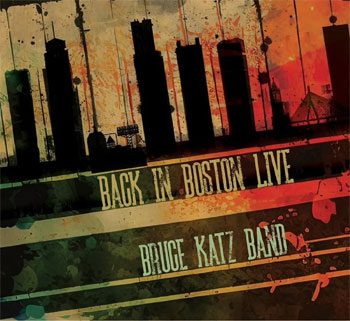 It’s refreshing to encounter an artist whose work encompasses soul jazz, blues and r&b, executing each style with verve and authenticity. That’s certainly the case with Back in Boston Live, the latest from keyboardist and band leader Bruce Katz. Right out of the gate he lays down a tasty groove with the B3-led original “The Czar.” The bass line is rock-solid too, and it’s Katz on organ pedals. Drummer Liviu Pop lays down a solid backbeat, and guitarist Aaron Lieberman alternates between supportive rhythm playing and lean’n’mean lead breaks.
Most of the eleven cuts on this set – cut live at Norwood, Mass.’s Fallout Shelter – are Katz compositions, and their titles often telegraph what you’ll hear: “Take the Green Line,” “For Brother Ray,” etc. Bassist Jess Williams handles the bottom end on half of the cuts, including a reading of Leroy Carr’s “Blues Before Sunrise.” On that track – which has a feel reminiscent of John Mayall’s Bluesbreakers – Lieberman takes a lead vocal tun while Katz throws down some appealing ivory-tickling.
The album’s only other cover is a take on Dickey Betts’ Allman Brothers Band classic, “In Memory of Elizabeth Reed.” At nine-plus minutes, the trio (with Katz back on organ and pedals) has and takes plenty of space to stretch out. Their sound is leaner than the ABB’s, but they play with equal parts muscle and finesse.
Katz’s “Don’t Feel So Good Today” is sprightly jump blues with a sassy and saucy Lieberman lead vocal. “Get your Groove” is gospel-inflected blues. “Gary’s Jam” is solidly back in soul jazz territory, with lots of engaging interplay between Katz and Lieberman. “Dreams of Yesterday” is a meditative piano-centric blues with some lovely guitar work that feels like (but is not) pedal steel. “Just An Expression” is fusion-y, hard bop jazz with some knotty twists and turns that keep the listener on toe-tops.
Listeners who shy away form live albums need not do so here. Back in Boston Live has the spirit and energy of in-person performance, with the sonic quality of a studio recording. The audience is mixed almost completely out of this line recording; unless you’re listening closely for it between tracks, you’re not likely to notice that there’s an audience.
About the Author

Bill Kopp
With a background in marketing and advertising, Bill Kopp got his professional start writing for Trouser Press. After a stint as Editor-in-chief for a national music magazine, Bill launched Musoscribe in 2009, and has published new content every business day since then (and every single day for several years). The more than 5000 interviews, essays, and reviews on Musoscribe reflect Bill's keen interest in American musical forms, most notably rock, jazz, and soul. His work features a special emphasis on reissues and vinyl. Bill's work also appears in many other outlets both online and in print. He regularly hosts lecture/discussions on artists and albums of historical importance (including monthly events Music to Your Ears and Music Movie Mondays), and is a frequent guest on music-focused radio programs and podcasts. In Spring 2023 he taught a history of Rock 'n' Roll at UNC Asheville's College for Seniors. He also researches and authors liner notes for album reissues -- some 40 to date -- and co-produced a reissue of jazz legend Julian "Cannonball" Adderley's final album. His first book, Reinventing Pink Floyd: From Syd Barrett to The Dark Side of the Moon was published by Rowman & Littlefield in 2018, and in paperback in 2019. His second book, Disturbing the Peace: 415 Records and the Rise of New Wave, was published in 2021 by HoZac Books. His third book, What's the Big Idea: 30 Great Concept Albums is available now. Read even more about him here.