
DEVO’s Duty Now for the Future: Mutate, Don’t Stagnate (Part 1 of 4)
DEVO are that rarest of creatures: pop music artists who are also culture jammers. Look beyond the surface of the band’s sound and visuals, and discover an off-kilter and ironic perspective informed by serious art, social change and political unrest. So while DEVO scored hit singles with “Whip It” (No. 14 in 1980) and a cover of Lee Dorsey’s “Working in the Coal Mine” (charting in four countries) plus a succession of popular videos on MTV, there’s much, much more to the group from Akron, Ohio.
DEVO was formed in 1973 by brothers Mark and Bob Mothersbaugh plus brothers Gerald (Jerry) and Bob Casale along with Alan Myers. From the start, the surreal troupe were pioneers, both in music and in the field of music video years before MTV began. The band’s wickedly deconstructed cover of the Rolling Stones’ “(I Can’t Get No) Satisfaction” unleashed their deliberate madness upon an unsuspecting world. Nearly 50 years later, DEVO are most definitely not – as one of their best songs suggests – through being cool. Ahead of the band’s 2026 “Mutate, Don’t Stagnate” tour, I spoke with Mark Mothersbaugh about a range of DEVO-related topics.
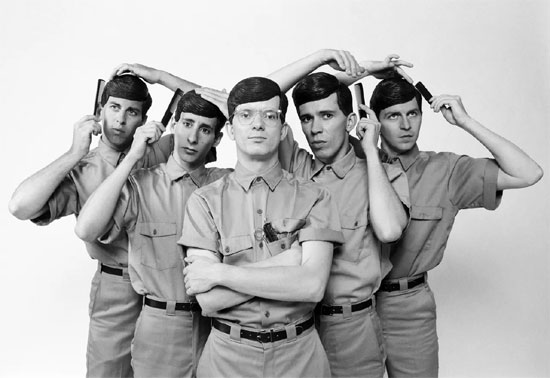
As was the case with many, my first encounter with DEVO was seeing the band on Saturday Night Live in October 1978. I didn’t know what to think; I was a kid, and I was confused because I had never seen nor heard anything like DEVO until that moment. Over time, I came to understand that the band was about more than music: the intersection of art, culture and politics. From your perspective, was it necessary for people to understand all that to be able to appreciate what DEVO was doing?
Mark Mothersbaugh: I felt our interest was to talk about humans as the one species out of touch with nature. But we also felt that people could get into DEVO at any different level, or not at all. To get what we were talking about across to people, we had decided it wasn’t going to be rebellion. We’d already seen the punks, and we were there for Kent State [shootings by the National Guard]. You’re seeing it happen again now all over the world: when the powers get irritated enough, they smash you and show you that you’re nothing.
So we were curious: How do you change things? And we realized that elements like advertising – Madison Avenue – they change things. They got people to eat things they shouldn’t eat, buy things they shouldn’t buy, drive cars they shouldn’t drive, and be happy about it. And we thought, “It’s their techniques that allow that to happen. So what if we use their techniques for our purposes?”
And that’s what made us interested in going from being a very eccentric, far-out, kind of “Captain Beefheart meets an Italian sci-fi movie meets Sun Ra” kind of band to using some of the techniques of people like the Ramones. Because we saw that they were very succinct, and they had a message. We thought that would attract people to us rather than repel them. We [had been] playing clubs in Ohio where after the first set, people would pay us to leave! We’d be like, “Oh, we’ve got two more sets of music for you!” They’d go, “Oh, no, that’s okay. We’ve had enough. We’ll pay you the full amount – all $20 – if you just leave now.”
I discovered early ‘70s German bands like Neu!, Harmonia and Cluster years after I first heard DEVO. With the benefit of hindsight, it seems clear that you were investigating some similar musical ideas. Were you aware of those bands when DEVO started, or was some of that creativity simply in the zeitgeist?
Oh yeah, Neu!, very much so. And Cluster and Can. We were interested in what was happening in Europe in their experimental music, and even stuff that was more esoteric, like Morton Subotnick here in the U.S., and Walter/Wendy Carlos, who did maybe one of the all-time greatest soundtracks ever using Moog vocoders.
It was hard to find that stuff, though. You have to understand: It was not like now; kids have got it so easy. They just go, “Oh, what band do I like?” And then they go, “What band did they like? And what band influenced them?” And they [discover that] they like Nirvana, and that Nirvana was influenced by DEVO; they covered DEVO songs.
They can find things out a lot easier. It was harder back in the ‘60s and ‘70s. You’d go to a record store and have to fight your way through Annette Funicello cutouts and giant Frank Sinatra posters to get to rock. And then you’d have to go find one little cardboard bin where you’d find the interesting music. So Cluster – or Silver Apples – was all much more difficult to find in those days.
It’s funny you mention Neu!, because [guitarist] Michael Rother had just finished doing a solo album at Conny Plank’s Studio right before we got there [to make 1978’s Q: Are We Not Men? A: We Are Devo!]. And so he and Can’s Holger Czukay were still around while we were doing some of our recording.
The first day we got to Germany, Jerry [Casale, bassist] had missed his flight, so there were four of us. We had all the gear set up, so with Conny and Czukay and [Brian] Eno and [David] Bowie, we just tested everything. But then it turned into a jam, an all day jam session with Dieter Moebius [of Cluster and Harmonia] and Eno and Bowie playing stuff. And you hear Eno talking over the top of the music while we’re playing. There’s a reel of that music somewhere down in the basement here.
So it was recorded…!
Yeah, while they were just setting up all the mics. It was an interesting recording studio; it was a farm, a pigsty that had been converted.
Do you think there’s any chance that recording might ever come out?
Oh, who knows? Everything shows up somewhere. Let’s hope so; probably.
About the Author

Bill Kopp
With a background in marketing and advertising, Bill Kopp got his professional start writing for Trouser Press. After a stint as Editor-in-chief for a national music magazine, Bill launched Musoscribe in 2009, and has published new content every business day since then (and every single day for several years). The more than 5000 interviews, essays, and reviews on Musoscribe reflect Bill's keen interest in American musical forms, most notably rock, jazz, and soul. His work features a special emphasis on reissues and vinyl. Bill's work also appears in many other outlets both online and in print. He regularly hosts lecture/discussions on artists and albums of historical importance (including monthly events Music to Your Ears and Music Movie Mondays), and is a frequent guest on music-focused radio programs and podcasts. In Spring 2023 he taught a history of Rock 'n' Roll at UNC Asheville's College for Seniors. He also researches and authors liner notes for album reissues -- some 40 to date -- and co-produced a reissue of jazz legend Julian "Cannonball" Adderley's final album. His first book, Reinventing Pink Floyd: From Syd Barrett to The Dark Side of the Moon was published by Rowman & Littlefield in 2018, and in paperback in 2019. His second book, Disturbing the Peace: 415 Records and the Rise of New Wave, was published in 2021 by HoZac Books. His third book, What's the Big Idea: 30 Great Concept Albums is available now. Read even more about him here.