
Mann Underground: Geoff Mann Pays Brilliant Tribute to His Father (Part 1 of 3)
 A portion of this feature appeared previously on The Tonearm.
Over the course of his career, flautist Herbie Mann released nearly 90 albums of original material. Nominally a jazz artist, Mann was in fact a pioneer in the exploration of other genres, an early and important figure in what would come to be known as world music. Mann had a keen eye for talent, often making unusual choices of players in his groups and on his albums. Notable Herbie Mann sidemen included Chick Corea, Larry Coryell, Tony Levin, Sonny Sharrock and Duane Allman.
Mann died in 2003, and in the years after his death, his body of work has come in for re-evaluation; while some of his musical excursions (like his 1975 Top 40 disco tune “Hi-Jack”) raised eyebrows within the jazz world, his boundary-pushing approach and championing of underappreciated artists was often revolutionary.
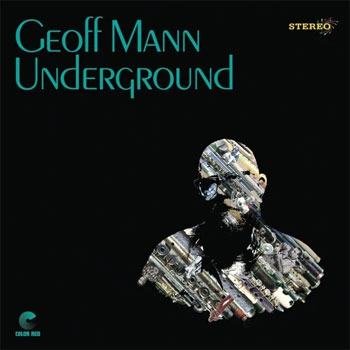
Near the end of his life, Mann brought his son Geoff in as a session musician to play on what would be the flautist’s next-to-last release, 2002’s A Dance at the Rise of the Moon. Other than that, drummer Geoff Mann had never been involved with his father’s music. Until now: though he has worked for decades – playing in Antibalas Afrobeat Orchestra, leading his own groups and composing and recording many film soundtracks – Mann’s latest project is Underground, a re-imagining of select cuts from one of his father’s most celebrated records, 1969’s Memphis Underground. Working with a coterie of top players, Geoff Mann has captured the spirit of that record while giving the music his own spin.
Tell me about your musical worldview.
Geoff Mann: My first love was classic rock: Beatles, Zeppelin, Stones, things like that. In high school when I decided to take music study more seriously, I was playing drums. My reasoning was, “Those drummers didn’t study each other; they were studying jazz. So I should study what they studied. If I want to sound like John Bonham, I’m not going to study John Bonham. I’m going to study what John Bonham studied.” So that was my first motivation to get into studying jazz. And it wasn’t super serious. I didn’t really get that deep into it on a listening level. I listened to some records – Kind of Blue and a lot of the classics – and let those filter in. But I was still listening to Zeppelin and Rush.
And then I went to jazz school, to the New School in New York. And at that point you’re surrounded by these bebop and post-bop fanatics. So I got into that and started listening more and more of it. And I didn’t even really realize that I was becoming a true lover of that era of jazz until a few years into school. And I’m like, “You know what? I have not listened to one of my rock records in ages.” Because when my friends and I got together, we would listen to Miles, Ornette, Mingus or whatever were listening to. That’s what we would do when were together, initially for me, by a sense of peer pressure; I’m not going to show up to a room full of cool guys who are sitting around listening to Charles Mingus and say, “Hey, let’s put on Strawberry Alarm Clock!” That didn’t seem appropriate. And then by the time I realized it, jazz was what I wanted to listen to; it got more and more interesting to me. So I tricked myself into being a jazz musician.
And then when I got out of school, I started doing some more rock stuff. And I found myself in the Afrobeat revival circle of people. A lot of my friends were in Antibalas Afrobeat Orchestra, and I started playing with them in different spheres. That music really blew me away; I hadn’t really heard anything like Fela’s music and Tony Allen’s drumming before. It was one of the things. The first time I heard it, it split my brain and opened a new understanding of how rhythms worked and how things come together, the way things answer each other. What I thought of as a typical beat might be completely flipped on its head and played backwards to what I thought. And it grooves so hard when all the pieces come together.
So I found myself in that circle for a long time. And I was also doing a lot of free jazz stuff in the early 2000s. A lot of the touring I was doing was with that more open improvisation jazz stuff. So that’s where I’m coming from. I’m coming from a very improvisational and dynamic sensibility; at least that’s what I’m aiming for, because I really love when music has that kind of tension. Like the stuff with Fela where you have these interworking clockwork parts; everything is like a bouncing ball of feel, and it propels itself forward because it relies on everybody listening and being together in the music.
And that’s the same thing with free jazz. Good free jazz happens when people have their ears wide open, and they’re so deep inside what everybody else is doing. I definitely heard a lot of free jazz that I wasn’t as into, where everybody was just flailing on their own. I realize it can be cathartic for a lot of people, but I’m not on stage to provide my catharsis. I’m supposed to be giving something to the audience, not for myself. So my musical world view is listening, being together. All your parts don’t have to match, but they have to work together. And when that happens, it’s like a magical perpetual motion machine that just keeps on going.
About the Author

Bill Kopp
With a background in marketing and advertising, Bill Kopp got his professional start writing for Trouser Press. After a stint as Editor-in-chief for a national music magazine, Bill launched Musoscribe in 2009, and has published new content every business day since then (and every single day for several years). The more than 5000 interviews, essays, and reviews on Musoscribe reflect Bill's keen interest in American musical forms, most notably rock, jazz, and soul. His work features a special emphasis on reissues and vinyl. Bill's work also appears in many other outlets both online and in print. He regularly hosts lecture/discussions on artists and albums of historical importance (including monthly events Music to Your Ears and Music Movie Mondays), and is a frequent guest on music-focused radio programs and podcasts. In Spring 2023 he taught a history of Rock 'n' Roll at UNC Asheville's College for Seniors. He also researches and authors liner notes for album reissues -- some 40 to date -- and co-produced a reissue of jazz legend Julian "Cannonball" Adderley's final album. His first book, Reinventing Pink Floyd: From Syd Barrett to The Dark Side of the Moon was published by Rowman & Littlefield in 2018, and in paperback in 2019. His second book, Disturbing the Peace: 415 Records and the Rise of New Wave, was published in 2021 by HoZac Books. His third book, What's the Big Idea: 30 Great Concept Albums is available now. Read even more about him here.