
Blues Traveler: 40 Years of Run-Away Success (Part 1 of 2)
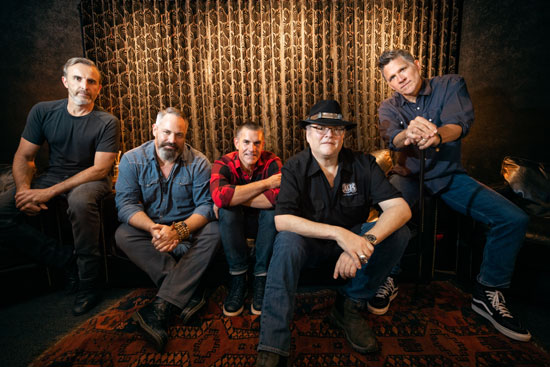
Coming out of the NYC bar scene, Blues Traveler led the 1990s wave of jam bands. Fronted by singer and blues harpist John Popper, the group features guitarist Chan Kinchla and drummer Brendan Hill. Original bassist Bobby Sheehan died in 1999; after his passing the band replaced him with Chan’s brother Tad and keyboardist Ben Wilson. In the early ‘90s, Blues Traveler launched the wildly successful traveling H.O.R.D.E. festival; by 1994 they were among the most popular live and recording acts.
Today the band maintains its heavy touring schedule, and Blues Traveler still makes records; 2023’s Traveler’s Soul is their latest. The band’s 2026 run of dates kicked off with a show at the Bonnaroo Festival in Tennessee; in early July Blues Traveler embarked upon a tour co-billed with two other ‘90s sensations, Gin Blossoms and Spin Doctors. Ahead of those dates, Chan Kinchla spoke with me about the band’s early days, its progress, and what he’s learned along the way.
The band’s first appearance on David Letterman’s show was a turning point. How did that come about, and what did it mean for Blues Traveler?
Well, of course that was huge. It was our first real national exposure. Back in ‘88, ‘89 we were a New York City band, and we were playing all these little dive bars: five, six nights a week all over New York. And we kind of became the biggest little bar band in New York. We had a reputation around the city, and we were playing all the time. One place was Mondo Kane, which is down in the Village, where we played pretty much weekly. We had a lot of good times at that bar. There was a guy named John who was moonlighting as a bartender there. John had a job as a talent buyer for Letterman, and he got us in the door there.
Right around then, we released our first record, so there was a reason to have us on. It was just me and John [Popper] to start. That was all they would do, because the house band loved to play with people. Dave really took a liking to John and to us, so that turned into a regular thing, which was just so cool. When we were growing up – especially John and me – we watched Letterman on late-night TV. I would be sitting in my room practicing scales or whatever, watching Letterman, jamming with the band. We were huge fans, so for us, that was an amazing opportunity. And you know, Dave’s a legend.
Do you have any idea how many times you ended up being on Letterman’s show? [Google says Blues Traveler holds the record at 24 times.]
It’s always great when you have no idea. Because it was so many times. We were actually the first band to ever play the Ed Sullivan stage [when The Late Show moved to CBS in 1993]. They had us because they knew we were local; we came in for a trial, run-through show that wasn’t designed to air. And we ended up playing again later on when we had a record come out.
What was the original inspiration for the H.O.R.D.E. Festival that Blues Traveler launched in 1992?
Well, we just did a documentary, and so it tickled me to hear all the theories about its mystical beginnings! But I was there.
Chris Barron from Spin Doctors was our friend from high school. Chris, Bobby [Sheehan] and I went to Lollapalooza, and we were like, “This is fantastic!” There were a few other bands like Phish, Widespread Panic, Aquarium Rescue Unit, and Spin Doctors. We already would play together at college quad spring flings or whatever, so we were like, “We should get our knucklehead crew together and do something like this.” So we were just copying Lollapalooza there.
At the time, they called us neo-hippies or something. But there was this whole set of what later became what’s called jam bands. There was a fertile ground for something like that to happen, but none of us at that point were known at all, other than in our little regions. We were all very hard-touring bands, but very regional; there was no national anything for any of those bands. So H.O.R.D.E. was a very underground festival at the time; none of us had any hits.
Bela Fleck was on the four southern dates, because Phish could only do the four northern ones. And a lot of those early shows were not very well attended, because it was what it was. But it turned into such a fun thing. And it really solidified our little east coast scene, from Widespread Panic’s region up through us up to Phish and all the other tangential bands. All those bands – sans Aquarium Rescue Unit, unfortunately – are still doing great business and having successful careers in various different ways. So it’s pretty freaking cool.
During the band’s A&M Records years, you had Gold, Platinum and even 6X Platinum-selling albums. And you landed a whole bunch of singles on the charts. But Blues Traveler wasn’t exactly an overnight success; Four was the breakthrough album. Tell me how that all came about.
There are a lot of up and coming bands that do great business. That first 10 years is kind of your time to be a hot young band, which is as it should be. But none of that happened with us with A&M until our fourth record. When we made our previous records, they just kept us around because were cheap. We made our records cheaply, and we did great business touring. And that was the model then: You built your audiences. With every record we tried to get some stuff on the radio, but for those first three records, nothing stuck.
We’d had some good college radio success with a few songs. But we were as surprised as anyone when [in 1994] Four’s “Run-Around” and “Hook” became such huge hits. I’ve got to give A&M credit: They were great. They were smaller; it was before Interscope bought ‘em. It was still people. We kind of grew with them, and we knew all the people. So by the time Four came around, we knew who were working with. Later they just became a huge corporate entity.
It’s a funny story. We turned in the Four record and they were like, “You’ve made too much of a ‘record company’ record. There’s not enough weird Blues Traveler stuff on it.” We had really wanted to focus down and make the songs tight. But they were like, “Go back and record some more weird, funky Blues Traveler stuff; flesh out the album a little bit.” So we had this quirky song called “Hook,” which we thought was making fun of making singles. And “Brother John” was another kind of live thing that we stuck on there.
But that’s the kind of relationship we had with the record company back then. There was some solid give and take; we respected their opinion, and we worked together. I don’t know how it works now.
To be continued…
About the Author

Bill Kopp
With a background in marketing and advertising, Bill Kopp got his professional start writing for Trouser Press. After a stint as Editor-in-chief for a national music magazine, Bill launched Musoscribe in 2009, and has published new content every business day since then (and every single day for several years). The more than 5000 interviews, essays, and reviews on Musoscribe reflect Bill's keen interest in American musical forms, most notably rock, jazz, and soul. His work features a special emphasis on reissues and vinyl. Bill's work also appears in many other outlets both online and in print. He regularly hosts lecture/discussions on artists and albums of historical importance (including monthly events Music to Your Ears and Music Movie Mondays), and is a frequent guest on music-focused radio programs and podcasts. In Spring 2023 he taught a history of Rock 'n' Roll at UNC Asheville's College for Seniors. He also researches and authors liner notes for album reissues -- some 40 to date -- and co-produced a reissue of jazz legend Julian "Cannonball" Adderley's final album. His first book, Reinventing Pink Floyd: From Syd Barrett to The Dark Side of the Moon was published by Rowman & Littlefield in 2018, and in paperback in 2019. His second book, Disturbing the Peace: 415 Records and the Rise of New Wave, was published in 2021 by HoZac Books. His third book, What's the Big Idea: 30 Great Concept Albums is available now. Read even more about him here.