
A Talking Heads Top Ten
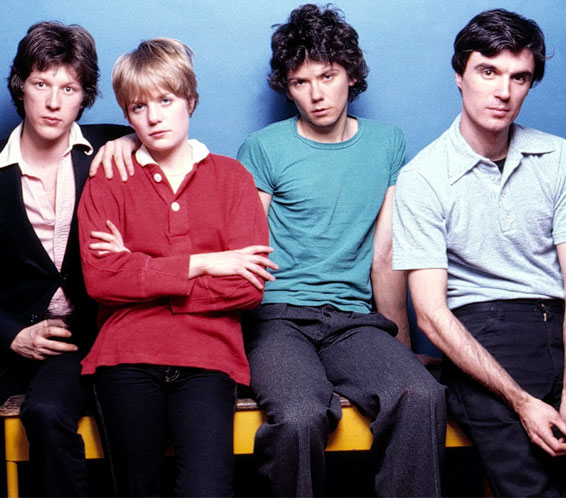 With their sophisticated brand of new wave-meets-funk and art rock, Talking Heads were a bright spot on an already rich and vibrant music scene of the late ‘70s and beyond. Adopting parts of the punk ethos (but notably not the “destroy everything that came before” mindset), Talking Heads were unafraid to experiment, to push their sound upward and outward in different ways. They worked with avant garde artist and producer Brian Eno, and they explored world music. At one point they even expanded their band to include giants from the world of funk (Bernie Worrell) and art rock (Adrian Belew).
Even as their later music seemed to take a turn toward the mainstream, that had as much to do as anything with the music scene at large catching up with what Talking Heads were already doing. The band released its final studio album in 1988 and closed up shop in 1991. But 30-plus years after they called it a day, people are still listening to – and talking about – Talking Heads.
Here’s my list of ten especially significant tracks from the band, presented with an important disclaimer: All of their albums are worthwhile.
“Uh-Oh, Love Comes to Town” from Talking Heads: 77 (1977)
The opening track on Talking Heads’ debut long player, “Uh-Oh, Love Comes to Town” introduced the group’s unique sound: part pop, part funk, part gritty NYC guitar-centric new wave. David Byne’s distinctive vocals made the song unique, as did drummer Chris Frantz’s steel drum solos, something rarely heard then or now on a nominally rock recording.
“Psycho Killer” from Talking Heads: 77 (1977)
Talking Heads’ debut album was informed by the trendy and boundary-pushing New York City scene. That musical community was stylistically varied but included Ramones, Television, New York Dolls, Lou Reed, Suicide and many other acts whose influence far outstripped their record sales figures. “Psycho Killer” was one of the band’s earliest songs, included on a three-song demo tape used to shop a record deal. In its earliest incarnation, the song was a ballad, but buy the time the band cut it with co-producer Tony Bongiovi, “Psycho Killer” had become an art punk tune, one that soon became the band’s signature song.
“Take Me to the River” from More Songs About Buildings and Food (1978)
Throughout their run, Talking Heads rarely recorded outside material. Guitarist David Byne was and remains a gifted and prolific songwriter, and the band’s superb rhythm section – husband-and-wife team of Frantz and bassist Tina Weymouth – were no compositional slouches, either. But at the suggestion of co-producer (and former Roxy Music keyboardist) Brian Eno, the band agreed to record a cover of Al Green’s soul classic “Take Me to the River.” Talking Heads’ reading of the song is so distinctive that a generation of listeners grew up thinking they had written the song.
“Life During Wartime” from Fear of Music (1979)
Eno returned to the co-producer’s chair for Talking Heads’ third long player, 1980’s pioneering Fear of Music. The album would spawn no less than three singles; “I Zimbra” would make it to no. 28 on the U.S. Dance singles chart. And while it didn’t chart well a a single (no. 80 in the U.S., non-charting elsewhere), the insistent “Life During Wartime” was a breakthrough track that demonstrated Talking Heads’ skill at crafting edgy tunes that had melody and muscle. And its signature line (“This ain’t no party / this ain’t no disco / this ain’t no foolin’ around”) was imprinted on the minds of punk and new wave listeners of the era.
“Once in a Lifetime” from Remain in Light (1980)
Talking Heads’ tenth single is remembered at least as much for its groundbreaking music video as for the song itself. The video was choreographed by Byrne with Toni Basil, best known for her own MTV hit “Hey Mickey” but acclaimed among those in the know for her earlier work with The T.A.M.I. Show, The Monkees, Elvis Presley (his Viva Las Vegas film) and David Bowie.
“Girlfriend is Better” from Speaking in Tongues (1983)
By the time of their fifth studio album Speaking in Tongues, Talking Heads has been fully accepted into the musical mainstream. Arguably, that mainstream was much more interesting for the band having become a part of it. Drawing some of its textures from funk and hip hop, “Girlfriend is Better” became a highlight of the band’s live set. When Talking Heads shot and recorded their acclaimed concert film, Johnathan Demme’s Stop Making Sense, the song would be a centerpiece of that work. The live recording from Stop Making Sense would be released as a single in 1984.
“Burning Down the House” from Speaking in Tongues (1983)
Talking Heads truly brought the funk for “Burning Down the House.” The group’s earnest and genuine championing of music styles more associated with Black artists may well have helped in some way to bring outlets like MTV around to showcasing the work of artists of color. Irrespective of that, “Burning Down the House” was a juggernaut of a hit for the band, earning Talking Heads their first and only single to climb into the Top Ten on Billboard’s Hot 100, reaching no. 9.
“Road to Nowhere” from Little Creatures (1985)
By the time of 1985’s Little Creatures – the band’s sixth studio set – Talking Heads was a consistent commercial success. The album made it into the Top 20 in ten countries, the band’s first release to achieve that feat. Little Creatures spawned four singles, and “Road to Nowhere” was the second of those. The tune made it to the Top Ten in countries around the globe; in the U.S. it reached no. 5 on Billboard’s Bubbling Under chart.
“And She Was” from Little Creatures (1985)
One of Talking Heads’ most widely-appealing tracks, “And She Was” would be the third single from Little Creatures. The track charted in seven countries, and earned the distinction of appearing on no less than three charts in the U.S.: Billboard’s Hot 100 (no. 54), U.S. Dance singles (no. 33) and Mainstream Rock (no. 11).
“Wild Wild Life” from True Stories (1986)
The first single from Talking Heads’ 1986 penultimate studio album, the straight-ahead pop of “Wild Wild Life” earned the band Top 40 single status in five countries, including the no. 25 spot in the U.S. Though the band would release eight more singles, “Wild Wild Life” would be the band’s final charting single.
About the Author

Bill Kopp
With a background in marketing and advertising, Bill Kopp got his professional start writing for Trouser Press. After a stint as Editor-in-chief for a national music magazine, Bill launched Musoscribe in 2009, and has published new content every business day since then (and every single day for several years). The more than 5000 interviews, essays, and reviews on Musoscribe reflect Bill's keen interest in American musical forms, most notably rock, jazz, and soul. His work features a special emphasis on reissues and vinyl. Bill's work also appears in many other outlets both online and in print. He regularly hosts lecture/discussions on artists and albums of historical importance (including monthly events Music to Your Ears and Music Movie Mondays), and is a frequent guest on music-focused radio programs and podcasts. In Spring 2023 he taught a history of Rock 'n' Roll at UNC Asheville's College for Seniors. He also researches and authors liner notes for album reissues -- some 40 to date -- and co-produced a reissue of jazz legend Julian "Cannonball" Adderley's final album. His first book, Reinventing Pink Floyd: From Syd Barrett to The Dark Side of the Moon was published by Rowman & Littlefield in 2018, and in paperback in 2019. His second book, Disturbing the Peace: 415 Records and the Rise of New Wave, was published in 2021 by HoZac Books. His third book, What's the Big Idea: 30 Great Concept Albums is available now. Read even more about him here.