
The Cranberries’ ‘No Need to Argue’ Endures (Part 2 of 2)
Continued from Part One…
Street says that no importance was placed on begin able to replicate the album’s string parts in an eventual live setting. “That was great for the record,” he says. “If they wanted to play it live, they might have to work out a different way of playing it.” Lawler concurs. “When we were in the studio, it was like, ‘Let’s make these songs the best we can, and not worry about how we’ll do them live,’” he says.
Yet the band’s “live” feel in the studio was another important asset. Street notes that most artists today record with a click track to keep tempo rigidly consistent. Not so with The Cranberries. “If you listen to ‘Zombie,’” he says, “you can actually hear the tempo shifting, speeding up, slowing down. And that made it, really; that’s what has the energy in it. It’s wonderful.”
The album closes boldly with the serene and meditative title track, drawing down to only O’Riordan’s voice and a church organ. “I told them, ‘Guys, you’re not going to be on this one,’” Street recalls. “The boys were fine about it.”
The atmosphere in the studio was ebullient. “They were all really happy,” Street recalls. “Dolores was beginning to date Don [Burton], who became her husband. Everybody was in a really good place.” The band took a well-deserved break midway through the sessions, and at Street’s suggestion they all went skiing. O’Riordan took a fall on the slopes and suffered a severe injury that sidelined her for awhile. “That didn’t go down very well with the record company,” Street says with a mordant chuckle.
Street and the band nevertheless finished recording and mixing at London’s Townhouse Studios. “It all fell into place really well,” he says. “The chemistry felt really good; we were firing on all cylinders.” Lawler agrees and says that he and his band mates “knew that the album was good; we were proud of what we had done.”
The upcoming album’s leadoff track, “Ode to My Family” was released as a single in the UK in November. In an unnerving replay of the previous release cycle, it performed only modestly on the charts. “But then there was this anomaly,” Street says. “’Zombie’ came out, and it was unlike anything the band had done before.”
“Zombie” began to connect with listeners on radio and at concerts. “The rest,” Street says with a smile, “is history.”
Lawler notes that The Cranberries did encounter some initial pushback from their label, suggesting that “Zombie” was too controversial. “They thought it was too political, and that it might cause consternation if we released it as a single,” he says. He notes that The Cranberries had been featuring “Zombie” in their live show more than a year before it was recorded. “And it always got an incredible reaction,” he says. Even though those early audiences didn’t recognize the as-yet-unrecorded song, “by the time the second chorus came around, they were chanting the lyrics.” The band members stood their ground and Island released “Zombie” to worldwide success.
Highlights on the tour in support of No Need to Argue were many, but two dates stand out in Lawler’s memory. “I remember Woodstock ‘94 like it was yesterday,” he says. “I walked out onstage thinking, ‘Jesus! I’ve never seen anything like this in my life!’ It was just a sea of people. We were looking at each other, [realizing] that it was a pinch-me moment. And we gave it our all.”
The yang to that yin was a free outdoor acoustic show in Washington D.C. “Loads more people turned up than anyone expected,” Lawler says. Crowds began pushing toward the stage, and the overwhelmed security staff made the decision to cancel the show; a riot ensued. “It was surreal,” Lawler says, noting another downside. “Nobody got hurt, but someone stole an acoustic guitar; that was not very nice.”
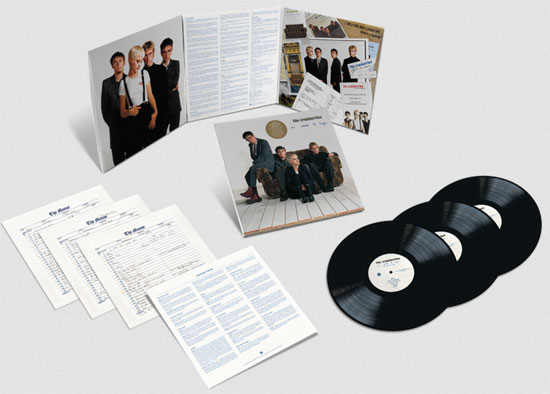
In addition to the original album, the new 30th anniversary edition of No Need to Argue features demos, early mixes, alternate tracks and live material (including songs from the Woodstock gig and from a Liverpool concert). A longtime Cranberries fan, Chvrches’ Iain Cook created remarkable remixes of two album tracks, “Zombie” and “Ode to My Family.”
“My goal was to bring a fresh and somewhat personal perspective to some very well known songs,” Cook explains. “It was important to me to take things apart and put them together in a way that sounds surprising and exciting.” He was guided by an important principle: “to be as respectful as possible, especially to Dolores’ vocal, while still pushing things a bit outside of the comfort zone.” Lawler consulted on the mixes, and Cook was delighted with his perspective. “I was sort of looking for some direction from him, some flags of things to avoid, but he graciously said, ‘Go for it and have fun!’ It was really fun working with Fergal; his encouragement and honesty throughout was refreshing.”
Cook reflects on The Cranberries’ legacy. “The songwriting is on a very different level to almost all of the indie bands around at the time,” he observes. “It’s never folky per se, but there’s a flavor that’s always there. And just as importantly, Dolores’ singing was quite unlike anyone else. There was so much purity and authenticity in every word; she put herself so completely into her performance. That’s a difficult and brave thing to do. I think that’s a huge part of the reason why their music connects so deeply and universally.”
Fergal Lawler believes the breakout success of No Need to Argue was the product of “everything happening at the right time. The record company worked really hard, and we toured hard.” Pausing a beat, he laughs and adds a closing remark. “If No Need to Argue was a shite album,” he says, “none of that work would have made a difference.”
About the Author

Bill Kopp
With a background in marketing and advertising, Bill Kopp got his professional start writing for Trouser Press. After a stint as Editor-in-chief for a national music magazine, Bill launched Musoscribe in 2009, and has published new content every business day since then (and every single day for several years). The more than 5000 interviews, essays, and reviews on Musoscribe reflect Bill's keen interest in American musical forms, most notably rock, jazz, and soul. His work features a special emphasis on reissues and vinyl. Bill's work also appears in many other outlets both online and in print. He regularly hosts lecture/discussions on artists and albums of historical importance (including monthly events Music to Your Ears and Music Movie Mondays), and is a frequent guest on music-focused radio programs and podcasts. In Spring 2023 he taught a history of Rock 'n' Roll at UNC Asheville's College for Seniors. He also researches and authors liner notes for album reissues -- some 40 to date -- and co-produced a reissue of jazz legend Julian "Cannonball" Adderley's final album. His first book, Reinventing Pink Floyd: From Syd Barrett to The Dark Side of the Moon was published by Rowman & Littlefield in 2018, and in paperback in 2019. His second book, Disturbing the Peace: 415 Records and the Rise of New Wave, was published in 2021 by HoZac Books. His third book, What's the Big Idea: 30 Great Concept Albums is available now. Read even more about him here.