
The Cranberries’ ‘No Need to Argue’ Endures (Part 1 of 2)
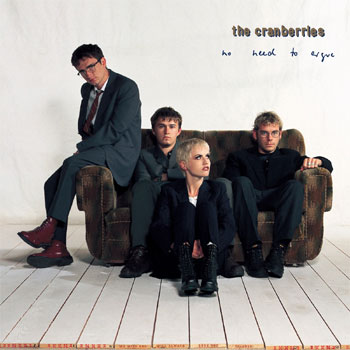 This featured appeared previously in SPIN Magazine.
Thirty years after its release, the second album from Irish alternative rockers The Cranberries has lost none of its power. Fronted by the compelling presence of vocalist Dolores O’Riordan, The Cranberries built upon the success of their 1993 debut with the sophomore-slump-defying No Need to Argue. Featuring two major worldwide hits (“Zombie” and “Ode to My Family”) alongside a varied yet unerringly strong collection of 11 other songs, the album changed the fortunes of the quartet from Limerick. Eventually selling more than 7 million units in the U.S., No Need to Argue represented a watershed in the band’s history, and rapturous critical acclaim reinforced The Cranberries’ status as an important force in music. A new 30th anniversary expanded edition celebrates the album and its enduring legacy.
Dolores O’Riordan’s distinctive vocals are a signature of The Cranberries’ sound, but it would be the collective creative input of the whole group – O’Riordan plus guitarist Noel Hogan, bassist Mike Hogan and drummer Fergal Lawler – that yielded music that would resonate and endure with listeners. The group’s sound was informed by contemporary influences – The Smiths and other postpunk acts – but also by Irish folk. Yet Lawler says that there was never a conscious effort to sound a certain way, or to combine varied musical textures. “None of that was ever spoken about,” he says. “It was subliminal.”
The group’s working methods were organic, with plenty of give-and-take. The band had begun with another singer, continuing briefly as an instrumental trio before O’Riordan came on board. “Once Dolores joined, we’d give her a tape with the music, chords, whatever,” Lawler recalls, “and she’d come back a week later with lyrics, vocal melody, a string line. And we were like, ‘Okay, this is really going to work.’”
O’Riordan’s writing skillfully bridged personal and universal themes. Lawler concedes that Dolores didn’t like to explain her lyrics, preferring to let each listener develop his or her own sense of what the words meant to them. “It was enough that they liked the words,” he says.
Producer Stephen Street’s introduction to The Cranberries came through the band’s label, Island Records. He recalls the first time he saw the group onstage. “They were very nervous and they weren’t particularly great, to be honest,” he says. “But there was something there.” He listened to some of the group’s demo recordings, and was interested enough to schedule a test session. “It went great, and we got on really well,” Street says. All parties agreed that Street would produce what would become Everybody Else is Doing It, So Why Can’t We? “Stephen’s just a magician,” says Lawler. “He really clicked with the band from Day One.”
That album was initially a slow seller, so much so that the band’s future on Island was uncertain. But Street explains that Denny Cordell – the executive who had signed The Cranberries to Island America – persisted in promoting the group even after its two advance singles had been “pretty much ignored” in the UK. “When the album came out, they couldn’t get any media or press because that had all gone on months previously,” he says. But Cordell convinced MTV to add the band’s music videos to its playlist.
At the same time, college radio – a major force in breaking alternative artists of the era – picked up on the band. “So all of a sudden,” Street says with a smile, “this band who are on the cusp of being dropped by Island Records got a phone call: ‘You’re happening in America; you’d better get over here.’”
The Cranberries embarked on a heavy touring schedule in support of Everybody Else. “They worked really hard that year,” Street says. “Because they knew that they finally had a chance, and they weren’t going to let that drop.”
Buoyed by the success of two hit singles – “Dreams” and the worldwide smash “Linger” – The Cranberries’ debut album would earn Platinum status in five countries, selling 3.2 million units in the U.S. alone. It was an auspicious beginning. “And it was the start of a very long and very fruitful working relationship,” Street says.
The Cranberries hard work on the road paid off in more ways than one. The group that reconvened in the studio in November 1993 was greatly changed from the band of just a year before. “The main thing was that they’d done so much playing that they’d become much better musicians,” Street says. He emphasizes that the group members’ self-confidence had grown. “We went in feeling quite committed and bold: ‘No, we’re not gonna listen to anyone. We’re gonna just do what we really want to do.’ And that really felt strong.”
“We showed up in the studio with most of the songs – apart from ‘No Need to Argue’ – pretty much written,” Lawler recalls.
Initial sessions for what would become No Need to Argue commenced at The Magic Shop in New York City. Several of those recordings are featured as bonus tracks on the 30th anniversary release, and are noted as demos. Street diplomatically contests that notion. “They’re really alternate takes or works in progress,” he says, noting that the finished versions of those songs were often built upon the basic recordings made in NYC. “We recorded ‘Yeats’ Grave,’ ‘Everything I Said,’ ‘Empty,’ ‘Ridiculous Thoughts’ and some others there.”
Street admits that he helped the musicians sharpen some of their skills and expand their musical vocabulary. “I helped Noel [Hogan] learn the ways of putting a capo on a guitar, and playing in different tunings.” But the band had arrived at the studio with well-developed ideas as to where the music should go. “One of the best things I love about The Cranberries is the ‘space’ that’s there in the music. There was a certain magic they had,” he says.
The sublime string arrangements on songs like “Empty” are among the album’s many strengths. O’Riordan and Street would explain their ideas to John Metcalfe, who would then “score it properly for a quartet,” the producer recalls. “There’s something really delicate there,” Street says, noting that No Need to Argue is ultimately a record of contrasts. “But some of the best records are, you know.”
Click here to continue…
About the Author

Bill Kopp
With a background in marketing and advertising, Bill Kopp got his professional start writing for Trouser Press. After a stint as Editor-in-chief for a national music magazine, Bill launched Musoscribe in 2009, and has published new content every business day since then (and every single day for several years). The more than 5000 interviews, essays, and reviews on Musoscribe reflect Bill's keen interest in American musical forms, most notably rock, jazz, and soul. His work features a special emphasis on reissues and vinyl. Bill's work also appears in many other outlets both online and in print. He regularly hosts lecture/discussions on artists and albums of historical importance (including monthly events Music to Your Ears and Music Movie Mondays), and is a frequent guest on music-focused radio programs and podcasts. In Spring 2023 he taught a history of Rock 'n' Roll at UNC Asheville's College for Seniors. He also researches and authors liner notes for album reissues -- some 40 to date -- and co-produced a reissue of jazz legend Julian "Cannonball" Adderley's final album. His first book, Reinventing Pink Floyd: From Syd Barrett to The Dark Side of the Moon was published by Rowman & Littlefield in 2018, and in paperback in 2019. His second book, Disturbing the Peace: 415 Records and the Rise of New Wave, was published in 2021 by HoZac Books. His third book, What's the Big Idea: 30 Great Concept Albums is available now. Read even more about him here.